June 2016

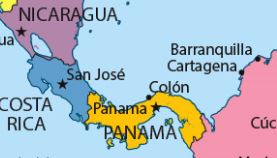
Update on Panama Papers – 6/27

Image courtesy of DollarPhotoClub.com

Here are a few recent articles on the Panama Papers leak. Doesn’t seem to be a lot of new developments since my last post three weeks ago.

6/5 – New York Times – Panama Papers Show How Rich United States Clients Hid Millions Abroad – The NYT has finally gained access to the Panama Papers.

In their research they have only found 2,400 Americans who ran money through companies set up by Mossack Fonseca, none of them high-profile, and apparently none of them from the political world.

Article tells the tale visible from correspondence for a few people who had already built a private fortune and then decided to park money overseas.

The basic asset protection shell structure includes two entities: a for-profit into which money is moved from the US, and a Panamanian based foundation which receives a contribution from the first shell, thus protecting the money from litigation, taxation, or disclosure.

Update on Panama Papers – 6/27 Read More »

An indication of Persian wealth from the book of Esther

Drawing of Persian daric gold coin. Alexander would have looted tons of these. Image courtesy of Adobe stock.

The number two man in the Persian Empire offered a bribe of 10,000 talents to the king in return for permission to kill off all the Jews living under the authority of the king. Today’s question: what would the amount of that bribe be worth in today’s money?

The Old Testament book of Esther tells the story of Haman plotting to kill all the Jews living in the Persian Empire.  Esther then told King Xerxes about the plot. The King executed Haman and allowed the Jews to defend themselves from those planning to exterminate them. The Jews survived. Those who expected to slaughter them did not. That is the short version. For the full details, check out the book of Esther.

Hers is a wonderful story of realizing God put you in a place to do a job that only you can do. So many other delightful and encouraging aspects of the story. If you haven’t looked at it lately, check it out.

There is one particular verse in the story which overlaps my discussion of Alexander the Great looting the Persian Empire. …

An indication of Persian wealth from the book of Esther Read More »

CPAs approve merger of AICPA and CIMA, creating another AICPA

Image courtesy of DollarPhotoClub.com

My fellow CPAs who are members of the AICPA voted overwhelmingly to approve the operating agreement or joint venture or merger (however you choose to describe the combination of operations) between the American Institute of Certified Public Accountants (AICPA) and the Chartered Institute of Management Accountants (CIMA), producing a new Association of International Certified Professional Accountants (AICPA).

CPAs approve merger of AICPA and CIMA, creating another AICPA Read More »

Alexander the Great’s biggest hauls when looting cities

Drawing of Persian daric gold coin. Alexander would have looted tons of these. Image courtesy of Adobe stock.
Drawing of Persian daric gold coin. Alexander would have looted tons of these (literally tons). Image courtesy of Adobe stock.

After developing a few points of reference for comparing ancient finances to now, I can get back to pondering the value of loot Alexander the Great stole while on his military rampage, I mean campaign.

Following estimates of how much loot Alexander the Great hauled away is from Professor Frank Holt’s book The Treasures of Alexander the Great: How One Man’s Wealth Shaped the World which I previously mentioned. (Can you tell I enjoyed his book?)

I will revise my previous calculation of Alexander’s haul from Susa and then develop a point estimate for the value of proceeds from his biggest sacking.

Approximate value of the haul from looting Susa, the capital of Persia

The loot from Susa is described by Prof. Holt, and converted to a current value, as follows:

  • 40,000 Talents of uncoined bullion, or raw silver
  • 10,000 Talents of gold coins, which I will assume is expressed as the equivalent in silver
  • 50,000 Talents – haul at Susa, estimated by Prof. Holt
  • 400 years wages per talent, for a skilled laborer, adjusted for Great Enrichment at a factor of 40; could be as high as 80 or even 100
  • 20,000,000 years wages
  • 200,000 centuries of wages for an average worker
  • $70,000 – average annual compensation package for a skilled construction worker today, calculated here
  • $1,400,000,000,000 – really rough approximation of current wages today for skilled construction workers which would be vaguely comparable to loot hauled off from Susa
  • $1.4 trillion – point estimate

Alexander the Great’s biggest hauls when looting cities Read More »

Total wealth held by American households as reference point for ancient finances

There is a lot of wealth visible in all those homes. Photo courtesy of Adobe Stock.

Here is another point of reference I’ll use for my discussion of ancient finances. The Wall Street Journal reported on 6/7/16:  Americans’ Total Wealth Hits Record, According to Federal Reserve Report.

Want to add this additional frame of reference before getting back to looking at Alexander’s haul as he looted various Persian cities.

The Fed released an estimate of the total wealth of all Americans for the first quarter 2016, which includes individuals and nonprofits.

Total wealth held by American households as reference point for ancient finances Read More »

Today is last day to vote no on the proposed merger to create another AICPA that will dilute the CPA brand

 Image courtesy of DollarPhotoClub.com
Image courtesy of DollarPhotoClub.com

Today, the 16th, is the last day for voting on the proposal of the American Institute of Certified Public Accountant (AICPA with CPA) to merge with the Chartered Institute of Management Accountants (CIMA) to create a new Association of International Certified Professional Accountants (AICPA with professional instead of pubic) that will promote the interests of CPAs and management accountants.

Yes, this would produce two AICPAs, with operations of the AICPA, the AICPA, and the CIMA all being conducted out of the AICPA office in North Carolina.

My worry is this will dilute the effort of the current AICPA to pay attention to the world of CPAs.

My previous posts:

There is still time to vote no, in order to prevent dilution of the CPA brand. Find that old email and cast your vote today.

Today is last day to vote no on the proposed merger to create another AICPA that will dilute the CPA brand Read More »

Stock market capitalization as reference point for ancient finances

Street sign for Wall Street and Broad Street, the heart of the Financial District of New York City. Image courtesy of Adobe Stock.

I am building some reference points for my ongoing learning about ancient finances. (If you couldn’t tell, I’m have a lot of fun. This learnin’ thing is cool.)

Here is the value of all the stock listed on the market in the G-20 economies. This is the total capitalization of the companies in those countries.

Data is from this site. A lot of other sources could be used and other years might give different results. The accuracy of the valuation of Alexander’s loot is only accurate to one or two significant digits. The needed estimates and assumptions will leave any comparisons accurate to only one significant digit. Actually, by the time my calculations are finished, the amounts will probably be accurate to maybe overestimating 20% or perhaps underestimating by 100% or 200%.

Thus, more precision in the market capitalizations is irrelevant.

Amounts are in US dollars and are for 2012: …

Stock market capitalization as reference point for ancient finances Read More »

Cheating on your Fitbit? After you stop laughing, think about this from the fraud perspective.

One option to get superb results on your exercise tracker. Photo courtesy of Adobe Stock.
One option to create superb results on your exercise tracker. Photo courtesy of Adobe Stock.

Sometimes you just have to laugh.

On June 9, The Wall Street Journal asked Want to Cheat Your Fitbit? Try a Puppy or a Power Drill.

Those informal office challenges to get people to exercise often involve using a Fitbit device to track how far participants walk or run.

Apparently a few folks have decided to take some shortcuts.

One fellow attached his tracker to the blade of an electric saw. After leaving it run overnight he had recorded 57,000 steps the next morning.

Cheating on your Fitbit? After you stop laughing, think about this from the fraud perspective. Read More »

News on regulatory oversight; insider trading, livings wills, manipulating interest rates.

Image courtesy of DollarPhotoClub.com

Interesting news from the financial world:

  • How NASDAQ watches for insider trading
  • Why bank regulators not disclosing the criteria for evaluating “living wills” causes more systemic financial risk
  • Enforcement efforts on two interest-rate manipulation fiascos

Here is how you get caught for trading on inside information

6/10 – Francine McKenna at MarketWatch – How NASDAQ watches for insider trading – Deep background on how NASDAQ monitors all the trading in the market for suspicious activity. They have a variety of tools and techniques to identify anomalies and drill down to eventually reach the individual trades.

News on regulatory oversight; insider trading, livings wills, manipulating interest rates. Read More »

Compensation for skilled construction worker

Tools used by heavy equipment operators. Photo courtesy of Adobe Stock.

The description of how much a drachma or Athenian Talent is worth is best considered by converting it to how many days labor could be purchased. Determining the silver content and converting that weight of silver to current dollars based on current silver values produces nonsensical answers. So I will try to adjust from a day’s wage 2000 years ago to a day’s wage today.

How to do that? Here is my feeble effort.

By the way, this post is one part of my learning about ancient finances.

The U.S. Bureau of Labor Statistics provides a good frame of reference for skilled construction workers in the May 2015 National Occupational Employment and Wage Estimates.

The data for Construction and Extraction Occupations category contains a reasonable frame of reference for skilled workers. The BLS data is organized into ‘detail’ categories with a few of those detail level job classifications rolled into a ‘broad’ subtotal, with a group of broad categories rolled into a ‘minor’ and those rolled up into a ‘major’ category.

Construction and Extraction Occupations is a broad category. Construction Trade workers in a minor category. Brickmasons, Blockmasons, and Stonemasons and Construction Equipment Operators within that grouping are broad categories. Carpenters are a detail category.

Here are a few points of reference: …

Compensation for skilled construction worker Read More »

Societe Generale and their trading fiasco is back in the news. Oh, firing someone who lost $5 billion in unauthorized trades is a wrongful termination.

Image courtesy of Adobe Stock.

I can now add the French judicial system to the reeeeeally long list of things I just do not understand:

6/7 – Wall Street Journal – Court Finds Kerviel, Whose Bets Lost Bank Billions, Was Fired Unfairly – A French court awarded a fired banker US$511,000 for what we would call wrongful termination in the US.

Why was he fired? He merely cost the bank €4.9B back in 2008 after they unwound his unauthorized trades. That is only $5,530,000,000 at today’s exchange rate.

First, some background. You can check out the WSJ article on 10/6/10 for more details: Rogue French Trader Sentenced to 3 Years.

Societe Generale and their trading fiasco is back in the news. Oh, firing someone who lost $5 billion in unauthorized trades is a wrongful termination. Read More »

Are you richer today than John D. Rockefeller was in 1916? The answer is, um, yes.

Would you trade your place in life today for life occupying the Gould-Guggenheim mansion when it was completed in 1912? Even if a billion dollars was tossed into the trade? Photo by Adobe Stock.
Would you trade your place in life today for life occupying the Gould-Guggenheim mansion when it was completed in 1912? Even if a billion dollars was tossed in to sweeten the swap? I would not make the trade.  Photo by Adobe Stock.

I suggest you are in fact richer today than John Rockefeller was 100 years ago. If it were possible for Prof. Don Boudreaux to switch places with John Rockefeller’s life and even if he could have a billion dollars after he arrived back in 1916, he would not make the switch. He would rather live as a comfortable professor today than be a billionaire 100 years ago.

I agree.

Here are three posts to explain this strange idea: first, what life was like 100 years ago, why Prof Boudreaux would not make the switch, and then why Coyote Blog wouldn’t either.

(This post may seem to be out-of-place on my blog discussing accounting and auditing topics. This discussion is part of my enjoyable research on ancient finances and a related thread of how much life has improved over the last 200 years. Since I discuss finance at this blog, it actually fits.)

An article in The Atlantic on 2/11/16 describes America in 1915: Long Hours, Crowded Houses, Death by Trolley. The article is drawn from a report by the Bureau of Labor Statistics: The life of American workers in 1915If you enjoy this brief discussion, I heartily recommend you read the full BLS report. It is a fun read, but then, I am an accountant.

I will update a few of the stats in the Atlantic article where the author took a shortcut. When I browsed through the BLS report, I noticed some sentences which were repeated nearly verbatim in the article, which is okay since the report is a public document.

A few highlights:

Workers in factories averaged 55 hours a week. The fatality rate across the economy was 61 deaths per 100,000 compared to about 3.3 per 100,000 today.

Are you richer today than John D. Rockefeller was in 1916? The answer is, um, yes. Read More »

More reactions to Panama Papers leak


Image courtesy of DollarPhotoClub.com

Here are a few more recent articles on the offshore banking industry that were of interest to me:

  • Proposed U.S. rules that won’t do much
  • Law firm at center of the leaks is closing some remote offices

5/10 – Salon – The Obama administration’s Panama Papers misfire: Why new rules to curtail global tax avoidance could actually make things worse – This article follows up on my previous comments that the proposals from the feds to counter offshore banking will do very little to stop the practices.

Article says the details of the proposals accomplish very little and could actually make things worse.

More reactions to Panama Papers leak Read More »

So, how can we compare today’s wages with 100 years or 2,300 years ago?

What does that tetradrachm from Alexander the Great representing pay for two days of a skilled construction worker represent today? Image courtesy Adobe Stock.
What does that tetradrachm, from the era of Alexander the Great, representing pay for two days of a skilled construction worker, represent today? Image courtesy Adobe Stock.

The following numbers are based on purchasing power parity, which is a tool economists use to compare countries across currencies and across time.

Average income across the planet is now $33 a day, which is also about equal to average income in Brazil today or in the US back in 1941.

Income in places like the US and Sweden are 3 or 4 times the planet average.

Average income per person was about $3 a day from about 1800 all the way back until humans first appeared on the planet.  Dr. McCloskey says daily income sometimes in some places rose to $6 or $8 for a while but slipped back to the $3 range.

For illustration of what $3 per day looks like, consider Haiti or Afghanistan. In those two places, the current PPP income is $3.

So where does that leave us for a comparison? Consider this purchasing power parity analysis.

  • $3 – For all of history until about 1800 average daily income was about $3.
  • $33 – Today average income is about $33 in Brazil or a worldwide average.
  • $132 – Today average income in the US and Sweden is 3 or 4 times higher than the world average. The specific days point is $132 a day in the US in 2011.

Going from $3 to $132 is an increase by a factor of 44.

So, how can we compare today’s wages with 100 years or 2,300 years ago? Read More »

Update on Panama Papers – 6/1

Image courtesy of DollarPhotoClub.com

Seems there was a lull in the interesting articles on Panama Papers. Here are few articles catching my eye to get caught up.

  • How to prepare for a media firestorm
  • Searchable database released
  • A mere 35 Americans are visible in the Panama Papers database

5/9 – Nelson Granados at Forbes – Are You Law-Abiding and in the Panama Papers Database? How to Handle a Public Relations Crisis – Article is written on how a company who is legally and ethically using offshore accounts can prepare for the negative media attention when their name is revealed.

As a general concept these ideas apply to every business and charity. Getting ready in advance of a media firestorm will improve your chances of surviving the onslaught.

Short version: …

Update on Panama Papers – 6/1 Read More »